This is forwarded to me by a co-worker/designer in an e-mail. I thought I should blog it here.
The Top 10 Things They Never Taught Me in Design School
by Michael McDonough
1. Talent is one-third of the success equation.
Talent is important in any profession, but it is no guarantee of success. Hard work and luck are equally important. Hard work means self-discipline and sacrifice. Luck means, among other things, access to power, whether it is social contacts or money or timing. In fact, if you are not very talented, you can still succeed by emphasizing the other two. If you think I am wrong, just look around.
2. 95 percent of any creative profession is shit work.
Only 5 percent is actually, in some simplistic way, fun. In school that is what you focus on; it is 100 percent fun. Tick-tock. In real life, most of the time there is paper work, drafting boring stuff, fact-checking, negotiating, selling, collecting money, paying taxes, and so forth. If you don’t learn to love the boring, aggravating, and stupid parts of your profession and perform them with diligence and care, you will never succeed.
3. If everything is equally important, then nothing is very important.
You hear a lot about details, from “Don’t sweat the details” to “God is in the details.” Both are true, but with a very important explanation: hierarchy. You must decide what is important, and then attend to it first and foremost. Everything is important, yes. But not everything is equally important. A very successful real estate person taught me this. He told me, “Watch King Rat. You’ll get it.”
4. Don’t over-think a problem.
One time when I was in graduate school, the late, great Steven Izenour said to me, after only a week or so into a ten-week problem, “OK, you solved it. Now draw it up.” Every other critic I ever had always tried to complicate and prolong a problem when, in fact, it had already been solved. Designers are obsessive by nature. This was a revelation. Sometimes you just hit it. The thing is done. Move on.
5. Start with what you know; then remove the unknowns.
In design this means “draw what you know.” Start by putting down what you already know and already understand. If you are designing a chair, for example, you know that humans are of predictable height. The seat height, the angle of repose, and the loading requirements can at least be approximated. So draw them. Most students panic when faced with something they do not know and cannot control. Forget about it. Begin at the beginning. Then work on each unknown, solving and removing them one at a time. It is the most important rule of design. In Zen it is expressed as “Be where you are.” It works.
6. Don’t forget your goal.
Definition of a fanatic: Someone who redoubles his effort after forgetting his goal. Students and young designers often approach a problem with insight and brilliance, and subsequently let it slip away in confusion, fear and wasted effort. They forget their goals, and make up new ones as they go along. Original thought is a kind of gift from the gods. Artists know this. “Hold the moment,” they say. “Honor it.” Get your idea down on a slip of paper and tape it up in front of you.
7. When you throw your weight around, you usually fall off balance.
Overconfidence in as bad as no confidence. Be humble in approaching problems. Realize and accept your ignorance, then work diligently to educate yourself out of it. Ask questions. Power – the power to create things and impose them on the world – is a privilege. Do not abuse it, do not underestimate its difficulty, or it will come around and bite you on the ass. The great Karmic wheel, however slowly, turns.
8. The road to hell is paved with good intentions; or, no good deed goes unpunished.
The world is not set up to facilitate the best any more than it is set up to facilitate the worst. It doesn’t depend on brilliance or innovation because if it did, the system would be unpredictable. It requires averages and predictables. So, good deeds and brilliant ideas go against the grain of the social contract almost by definition. They will be challenged and will require enormous effort to succeed. Most fail. Expect to work hard, expect to fail a few times, and expect to be rejected. Our work is like martial arts or military strategy: Never underestimate your opponent. If you believe in excellence, your opponent will pretty much be everything.
9. It all comes down to output.
No matter how cool your computer rendering is, no matter how brilliant your essay is, no matter how fabulous your whatever is, if you can’t output it, distribute it, and make it known, it basically doesn’t exist. Orient yourself to output. Schedule output. Output, output, output. Show Me The Output.
10. The rest of the world counts.
If you hope to accomplish anything, you will inevitably need all of the people you hated in high school. I once attended a very prestigious design school where the idea was “If you are here, you are so important, the rest of the world doesn’t count.” Not a single person from that school that I know of has ever been really successful outside of school. In fact, most are the kind of mid-level management drones and hacks they so despised as students. A suit does not make you a genius. No matter how good your design is, somebody has to construct or manufacture it. Somebody has to insure it. Somebody has to buy it. Respect those people. You need them. Big time.
 Randomly came across Andrew Bawidamann’s web site and his work. Really good stuff! This guy got some serious talent…. My fav. ones are the pirate girl (in red) and the Navy SEAL/UDT diver girl. His style also reminds me of the mid-90s’ Warner Bro. Batman cartoon…
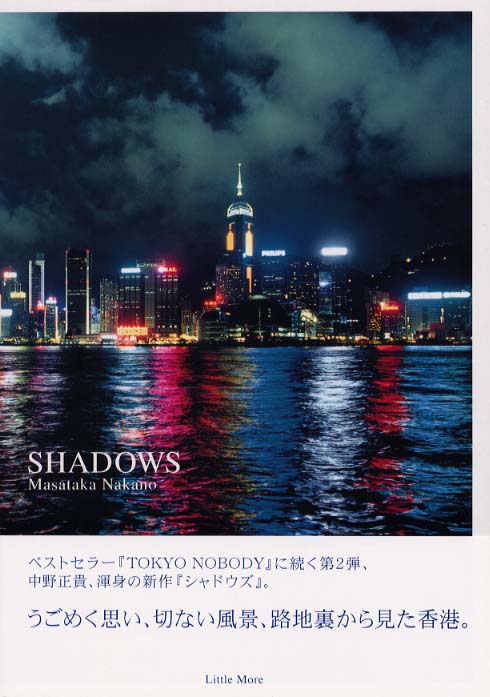
 I ran into this interesting photo essay book at the local Kinokuniya Book Store. You can say, this is the portrait of Hong Kong in the “alternative” sort of way. What’s interesting is that, the photographer’s image of Hong Kong is exactly how my impression of Hong Kong is like in the artiz-fratiz saturated style… All night shots too.
 George Chen DOT COM